
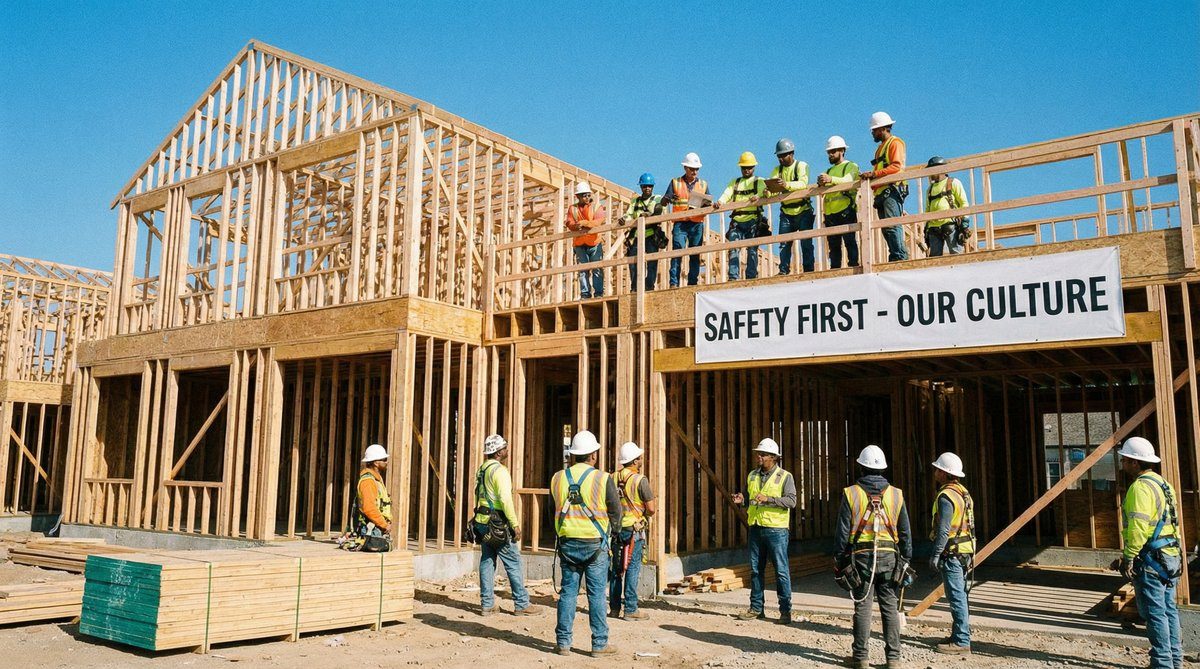
Workers Comp Cost for Framers 2025: Rates, Calculator & Savings Guide
Introduction
If you're a framing contractor, you're facing a dangerous convergence: workers comp claims for framers surged 200% in 2024 while overall construction saw a 20% decrease. This alarming trend means your insurance costs are likely rising—and understanding why is critical to controlling them.
Workers compensation represents one of the top three operating expenses for framing contractors, often consuming 2-10% of total project costs. Yet many framers overpay by thousands annually due to misclassification, poor safety programs, or simply not understanding the factors that drive their premiums.
The numbers tell a sobering story. According to the Bureau of Labor Statistics, framing contractors experience 7.2 injuries per 100 workers—more than three times the construction industry average of 2.3. Over 55% of these incidents involve falls from heights, making framers one of the highest-risk trades in construction.
- Understand exactly how much workers comp costs for framers (with real examples by business size)
- Calculate your own premium using the step-by-step formula
- Identify your correct class code (NCCI 5645 vs 5403) and state-specific rate
- Discover 7 proven strategies to reduce costs by up to 55%
- Navigate state requirements and avoid compliance penalties of $1,000-$10,000 or more
- Manage audits and avoid surprise charges
Based on analysis of 55+ authoritative sources including NCCI, OSHA, state workers compensation boards, and current 2024-2025 industry data, this guide provides the actionable intelligence framing contractors need to control their largest insurance expense.
What Is Workers Compensation for Framing Contractors?
Workers compensation insurance is a state-mandated program that provides medical expenses, lost wages, disability benefits, and death benefits to employees who suffer work-related injuries or illnesses. For framing contractors, this coverage isn't just legally required—it's critical financial protection that shields business owners from potentially devastating lawsuits while ensuring injured workers receive proper care.
The system operates as a "no-fault" insurance, meaning employees receive benefits regardless of who caused the injury. In exchange, they generally cannot sue their employer for workplace injuries. This arrangement protects both parties: workers get guaranteed benefits without litigation, and employers avoid unpredictable jury awards.
Workers Compensation Covers:
- Medical expenses - Doctor visits, hospital stays, surgery, medications, rehabilitation
- Lost wages - Typically 2/3 of average weekly wage during recovery
- Disability benefits - Temporary total, temporary partial, permanent partial, or permanent total disability
- Death benefits - Payments to dependents if a worker dies from work-related causes
Why Framers Face Elevated Risk
Framing contractors face daily exposure to falls from heights, heavy materials, power tools, and structural hazards. According to CPWR - The Center for Construction Research and Training, fatal injuries in construction increased 39.8% from 2011 to 2022, with construction accounting for nearly one-third of all high-cost workers compensation claims (those exceeding $3 million).
The Bureau of Labor Statistics reports that falls, slips, and trips account for 35.3% of all construction fatalities, making fall protection—or lack thereof—the primary cost driver for framing contractors' workers comp premiums.
Why Workers Comp Costs Are Rising for Framing Contractors
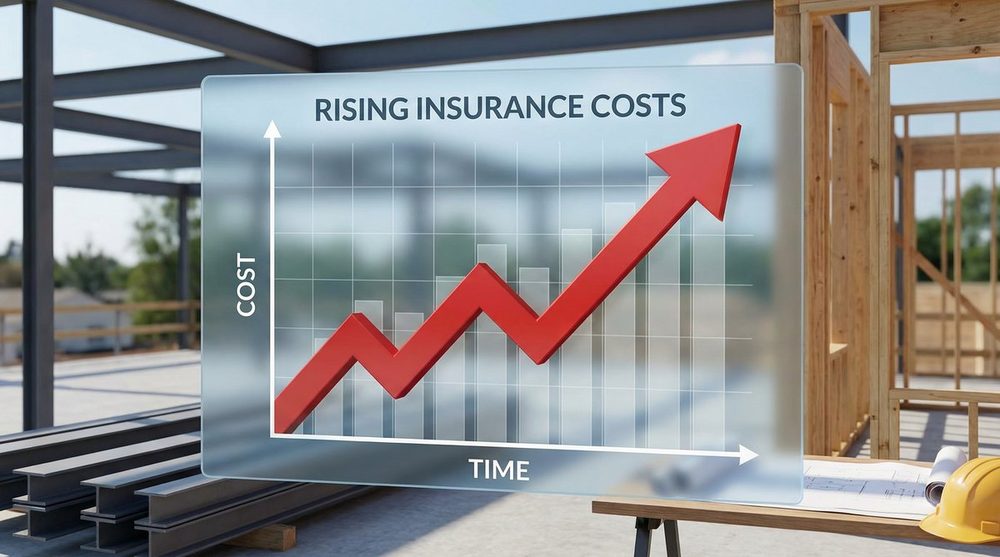
The Alarming 2024 Trend
Industry safety reports revealed a concerning outlier: framing contractors experienced a 200% increase in workers compensation claims while the broader construction industry improved significantly.
Consider the contrast:
- Framing contractors: 200% increase in claims
- Overall construction: 20% decrease in claims
- Electrical contractors: 46% decrease
- Other specialty trades: 36% decrease
This dramatic reversal makes framing contractors a priority concern for insurance underwriters, potentially leading to higher rates even as other trades see decreases.
Primary Risk Drivers for Framers
Over 55% of framing incidents involve slips, trips, or falls from heights—the single largest driver of workers compensation costs for framing contractors. — Industry Safety Research
This statistic explains why fall protection violations remain the #1 OSHA citation for 14 consecutive years. When framers skip harnesses, work on unguarded leading edges, or improvise scaffolding, they're creating the exact scenarios that generate expensive claims.
The injury rate tells the story clearly: 7.2 injuries per 100 framing workers compared to 2.3 for general construction. That's more than 3x the industry average, and insurance carriers price this risk accordingly.
Industry-Wide Cost Pressures
Even when claim frequency declines, severity continues rising. According to NCCI's State of the Line Report 2024, lost-time claim frequency declined 5% industry-wide, but:
- Medical claim severity: Up 6%
- Indemnity claim severity: Up 6%
- Average lost-time claim: $40,200 (versus $1,600 for medical-only)
Healthcare inflation continues outpacing general inflation, and wage increases mean higher replacement costs when workers are disabled. For framing contractors, this means each claim costs more even if you're having fewer incidents.
The Labor Shortage Impact
Construction faces a shortage of over 500,000 workers, according to industry reports. This creates multiple cost pressures:
- Rising wages automatically increase workers comp premiums (calculated as percentage of payroll)
- Inexperienced workers have higher injury rates—first-year employees account for 25%+ of all workplace injuries
- Rush to complete projects leads to safety shortcuts
- Less supervision as experienced workers spread thin
The vicious cycle: high insurance costs compress margins, creating pressure to cut corners, leading to more claims and higher costs.
How Much Does Workers Comp Cost for Framers?
Cost Breakdown by Business Size

| Business Size | Annual Payroll | Employees | Estimated Annual Cost | Monthly Cost |
|---|---|---|---|---|
| Solo Framer | $50,000 | 1 | $400-$800 | $35-$65 |
| Small Crew | $150,000 | 3-5 | $1,500-$2,500 | $125-$210 |
| Medium Operation | $300,000 | 6-10 | $2,500-$5,000 | $210-$415 |
| Large Crew | $500,000+ | 10+ | $3,000-$8,000+ | $250-$665+ |
Cost Per $100 of Payroll Explained
Workers comp premiums are calculated as a rate per $100 of payroll. For framers, this typically ranges from $5-$12 per $100, varying significantly by state and classification code.
Why this matters: Understanding your rate per $100 lets you accurately estimate costs as your business grows. If your rate is $8 per $100 and you expect $200,000 in payroll next year, your premium will be approximately $16,000.
State-by-State Rate Variations
Rates range dramatically based on state regulations and market conditions:
| State | Rate per $100 | Cost Level | Notes |
|---|---|---|---|
| California | $2.16 | HIGH | All contractors required 2025+ |
| New York | $2.23 | HIGH | Strict enforcement |
| Montana | $1.69 | HIGH | Remote area surcharges |
| Florida | $1.50 | MEDIUM | Hurricane exposure factor |
| Texas | $0.98 | MEDIUM | Voluntary but often required |
| Colorado | $0.75 | LOW | Strong safety programs |
| Arizona | $0.35 | LOW | Favorable regulatory environment |
| Virginia | $0.35 | LOW | Competitive market |
Real-World Cost Examples
Example 1 - Solo Framer in Arizona:
Example 2 - Small Crew in Texas:
Example 3 - Medium Crew in California:
Example 4 - Large Crew in Florida:
Notice how EMR impacts costs: the Florida crew has larger payroll but lower EMR (0.85), resulting in comparable costs to the California crew despite California's higher base rates.
Monthly Payment Options
- Traditional payment: 25% down payment plus 9 monthly installments
- Pay-as-you-go: Premium calculated each payroll run (eliminates large deposits)
- Annual lump sum: Often receives 5-10% discount
- Financing: Available through some carriers, adds interest costs
Factors That Affect Workers Comp Rates for Framers
Your workers comp premium isn't arbitrary. Four primary factors drive your costs, and understanding each gives you leverage to control expenses.
The Four Primary Cost Drivers
1. Payroll (The Base)
Your total remuneration to employees forms the calculation base. Higher payroll = higher premium, period. This includes wages, overtime (straight-time equivalent), bonuses, holiday pay, sick pay, and the value of meals/lodging. It excludes employer-paid group insurance, severance pay, and tips.
Critical point: Workers comp is based on PAYROLL, not employee count. Two employees earning $80,000 each cost more than four employees earning $30,000 each.
2. Classification Code (Risk Level)
Your NCCI classification code reflects the risk level of your specific work. For framers:
- Code 5645: Residential framing (buildings 3 stories or less) - $6-13 per $100
- Code 5403: Commercial framing (buildings over 3 stories) - $7-15 per $100
Incorrect classification can mean overpaying by 10-30% annually. Proper time-keeping to separate work types protects against defaulting to the highest-rated code.
3. State Base Rate (Location)
State regulatory environment—litigation rates, benefit levels, medical costs—determines your state's base rate. Moving from California ($2.16) to Arizona ($0.35) would reduce premiums by 84% on the same payroll.
4. Experience Modification Rate (Your Claims History)
Your EMR is a multiplier reflecting your claims history versus industry average:
- 1.0 = Average claims experience (baseline)
- 0.85 = 15% lower premiums (better than average)
- 1.25 = 25% higher premiums (worse than average)
Claims affect your EMR for a minimum of three years, making each incident extremely expensive over time.
Schedule Rating and Safety Credits
Beyond the four primary factors, carriers can apply schedule rating credits of 15-25% for:
- Documented safety programs with management commitment
- Drug-free workplace certification
- Return-to-work programs
- Industry safety group membership
- Superior loss control measures
Some contractors participate in safety group programs offering discounts up to 55% through shared risk pools with other safety-conscious businesses.
Workers Comp Class Codes for Framers (NCCI 5403 & 5645)
Classification codes are numerical identifiers that categorize workers by job duties and risk level. Each code carries a corresponding rate per $100 of payroll, and using the correct code is essential for accurate—and fair—premium calculation.
NCCI Code 5645: Residential Framing
Applies to: Interior framing work on residential buildings three stories or less
Typical work includes:
- Wall framing and floor systems
- Roof trusses and ceiling joists
- Interior partitions and blocking
- Door and window rough openings
- Residential deck framing
Average rate: $6-13 per $100 of payroll (varies by state)
NCCI Code 5403: Commercial Framing
Applies to: Carpentry work on residential structures exceeding three stories, commercial buildings, and mixed-use construction
Typical work includes:
- All carpentry on buildings over three stories
- Commercial office building framing
- Multi-story apartment construction
- Scaffolding and material handling
- Siding installation on commercial projects
Average rate: $7-15 per $100 of payroll (higher due to increased fall risk at elevation)
| Feature | Code 5645 | Code 5403 |
|---|---|---|
| Description | Carpentry - Interior | Carpentry - NOC (Not Otherwise Classified) |
| Building Type | Residential, 3 stories or less | Commercial, Residential over 3 stories |
| Average Rate | $6-13 per $100 | $7-15 per $100 |
| Risk Level | Lower (less height exposure) | Higher (more fall risk) |
| Common Projects | Single family homes, duplexes, townhomes | Apartment complexes, office buildings |
Why Proper Classification Matters
According to workers compensation audit specialists, without adequate time records, ALL payroll defaults to the highest-rated classification. This means if your employees do both residential and commercial work but you don't track hours separately, you'll pay the higher 5403 rate on everything.
State-by-State Workers Comp Requirements for Framers
National Coverage Requirements
49 states require workers compensation coverage—all except Texas, where the system is voluntary (though most contracts still require it). However, the threshold for mandatory coverage varies significantly by state.
Common employee thresholds:
- 1+ employees: Most states (Alaska, Arizona, California, Colorado, Florida, New York, etc.)
- 3+ employees: Georgia
- 4+ employees: South Carolina
- 5+ employees: Alabama, Mississippi
Critical: Construction contractors often face stricter requirements than other industries, with many states eliminating small-employer exemptions specifically for construction trades. Once you hire your first employee, you're typically required to carry coverage.
California 2025: A Major Change
Effective January 1, 2025, California eliminated ALL exemptions for licensed contractors. According to the California Contractors State License Board, even sole proprietors must now carry workers compensation coverage. This represents a significant policy shift that may spread to other states.
Impact for California framers:
- Sole proprietors can no longer self-exempt
- Coverage costs $2,000-$5,000 annually for solo operators
- Non-compliance triggers license suspension or revocation
- Sets precedent for other states to follow
Monopolistic State Funds
Four states operate monopolistic state funds where private carriers are prohibited:
- Washington
- Wyoming
- North Dakota
- Ohio
If you operate in these states, you must purchase coverage through the state fund only. Rates are set by the state without competitive bidding.
Penalties for Non-Compliance
Operating without required workers compensation insurance carries severe consequences:
- Fines: $1,000-$10,000 per violation (varies by state)
- Stop-work orders: Immediate halt to all operations
- Criminal prosecution: Misdemeanor or felony charges possible
- Personal liability: Business owner liable for ALL claim costs
- License revocation: Contractor license suspended or revoked
- Building permits: Cannot obtain permits without proof of coverage
The California CSLB specifically states that violations result in license action, and many jurisdictions check coverage before issuing permits.
How to Calculate Workers Comp Cost for Your Framing Business
The fundamental formula for calculating workers compensation premium is straightforward:
Let's break this down step by step.
Step 1: Determine Your Class Code
Check with your insurance agent or carrier to confirm your classification. In NCCI states:
- 5645 for residential framing (3 stories or less)
- 5403 for commercial/taller structures
If you perform both types of work, you'll need separate payroll tracking for each classification.
Step 2: Calculate Your Annual Payroll
What counts as payroll for workers comp:
- Gross wages and salaries
- Overtime (at straight-time equivalent, not premium)
- Bonuses and commissions
- Holiday, vacation, and sick pay
- Value of meals and lodging provided
What doesn't count:
- Employer-paid group insurance premiums
- Severance pay
- Tips (in most states)
- Uniform allowances
Step 3: Find Your State's Base Rate
Contact your insurance agent or check with your state workers compensation board. Rates are updated annually, so confirm you're using current figures. For framing contractors:
- Arizona: $0.80-$1.20 per $100
- Texas: $0.98-$1.50 per $100
- California: $2.16-$3.00 per $100
- Florida: $1.50-$2.00 per $100
Step 4: Apply Your EMR (If Applicable)
New businesses (first 2-3 years) typically use 1.0 (baseline). Established businesses with over $11,000 in annual premium or three years of operation will have calculated EMR. Request your EMR worksheet from your insurance carrier to verify accuracy.
Step 5: Calculate Final Premium
Example calculation:
Small framing crew in Texas:
- Annual payroll: $150,000
- Class code rate: $0.98 per $100
- EMR: 1.0
If that same contractor had an EMR of 1.25 due to claims:
That's an additional $367.50 annually due to poor claims history—and it compounds over three or more years.
Common Calculation Mistakes to Avoid
- Using gross revenue instead of payroll (these are very different numbers)
- Forgetting overtime and bonuses in payroll estimate
- Not accounting for EMR if established business
- Applying wrong class code for your actual work
- Using outdated rate information (rates change annually)
7 Proven Ways to Reduce Workers Comp Costs for Framing Contractors
Controlling workers comp costs requires proactive strategies, not just shopping for cheaper quotes. Here are seven evidence-based approaches that deliver measurable results.
Strategy #1: Implement a Comprehensive Safety Program (Save Up to 55%)

Safety programs deliver the highest ROI of any cost-reduction strategy.
Key components:
- Management leadership and commitment
- Worker participation in safety planning
- Hazard identification and assessment
- Hazard prevention and control measures
- Education and training programs
- Program evaluation and continuous improvement
- Communication protocols for multi-employer sites
The National Framers Council's FrameSAFE program provides a turnkey, bilingual safety solution specifically designed for framing contractors, including customizable safety manuals, toolbox talks, and OSHA inspection guidelines.
Real results: A Vermont heavy construction firm reduced lost-workday case rate by 33% and workers comp costs by 76% within three years through rigorous safety management.
Strategy #2: Improve Your Experience Modification Rate
Your EMR reflects your claims history, and improving it delivers automatic premium reductions.
How to improve EMR:
- Prevent claims through safety programs (frequency matters more than severity)
- Implement return-to-work programs to convert lost-time claims to medical-only
- Manage medical providers to control treatment costs
- Close claims quickly when appropriate
- Challenge errors by reviewing your EMR worksheet annually
Example impact: Reducing EMR from 1.25 to 0.90 on $20,000 base premium saves $7,000 annually—every year going forward.
Strategy #3: Ensure Proper Employee Classification
Maintaining detailed time records prevents overpayment from misclassification.
Best practices:
- Track hours by specific work activity daily
- Separate office/administrative work from field work
- Document when employees perform multiple job types
- Maintain records that support payroll division at audit
Potential savings: 10-30% if currently misclassified or defaulted to highest-rated code.
Strategy #4: Use Pay-As-You-Go Payment Plans

Pay-as-you-go workers comp calculates premium each payroll run based on actual wages paid.
Benefits:
- Eliminates 25% down payment requirement
- No large year-end audit adjustments
- Premium matches actual payroll exactly
- Improved cash flow for seasonal operations
- Often $0 down payment available
Available through major payroll providers (ADP, Paychex, Gusto) and many insurance carriers.
Strategy #5: Verify Subcontractor Coverage Religiously
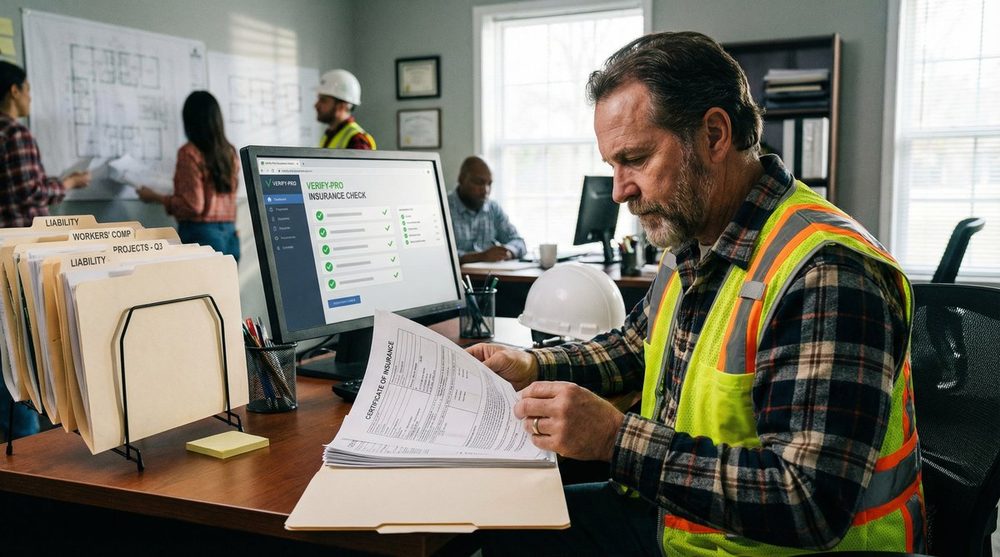
Uninsured subcontractors' payroll gets charged to YOUR policy at audit—often at your higher classification rate. This also affects your additional insured requirements.
Verification protocol:
- Never accept COIs directly from subcontractors (verify with their agent)
- Confirm coverage is current and continuous
- Check monthly for expirations and renewals
- Require 30-day cancellation notice endorsements
- Keep organized COI files with expiration tracking
Potential audit charge: $10,000-$30,000 for uninsured subcontractor payroll discovered at audit.
Strategy #6: Shop Multiple Carriers Annually
While base rates are similar in NCCI states, carriers offer different schedule credits and appetite for construction risks.
Shopping strategy:
- Work with independent agent accessing multiple carriers
- Shop 90 days before renewal
- Compare schedule credits and service offerings (not just price)
- Look for carriers specializing in construction
Typical savings: 5-15% by switching carriers with better credits for your specific situation.
Strategy #7: Establish Return-to-Work Programs

Return-to-work programs get injured employees back to modified duty faster, dramatically reducing claim costs.
According to Reemployability research:
- ROI: $16.07 for every dollar invested
- Cost reduction: Total workers comp expenses reduced by average 54%
- Claim values: Reduced by up to 70%
- Recovery time: Employees recover 3x faster when in modified duty
Modified duty positions for framers:
- Shop organization and tool maintenance
- Materials inventory and ordering
- Safety equipment inspection and documentation
- Limited office administrative tasks
- Quality control inspections (ground-level)
Critical: Create modified-duty positions BEFORE injuries occur. Having a plan ready demonstrates commitment to carriers.
Experience Modification Rate (EMR) Explained for Framers

Your Experience Modification Rate is perhaps the most important number in workers comp cost control after your first few years in business.
What EMR Is
EMR is a multiplier applied to your premium based on your claims history compared to similar businesses in your industry. The formula is:
- 1.0 = Average claims experience (baseline)
- Below 1.0 = Better than average (discount)
- Above 1.0 = Worse than average (surcharge)
When EMR Applies
Businesses typically qualify for EMR calculation after:
- Three years of operation, OR
- Annual premium reaches $11,000+ (varies by state)
New contractors operate at 1.0 EMR until qualifying.
How EMR Affects Your Costs
The EMR directly multiplies your base premium:
| Base Premium | EMR 0.85 | EMR 1.0 | EMR 1.25 | EMR 1.50 |
|---|---|---|---|---|
| $10,000 | $8,500 | $10,000 | $12,500 | $15,000 |
| $20,000 | $17,000 | $20,000 | $25,000 | $30,000 |
| $30,000 | $25,500 | $30,000 | $37,500 | $45,000 |
EMR as Business Qualifier
Beyond cost impact, EMR affects your ability to win work:
- Many general contractors require EMR below 1.0 to bid
- Government contracts often have EMR thresholds
- EMR above 1.20-1.30 can disqualify you from projects
- Good EMR = competitive advantage in bidding
Many contracts require minimum EMR to bid. Governments won't work with businesses with EMR ratings above certain numbers. — TriaxTec EMR Guide
How to Improve Your EMR
Since frequency is weighted more heavily than severity in EMR calculations, focus on preventing all claims—even small ones:
- Implement safety programs targeting claim frequency
- Create return-to-work options converting lost-time to medical-only claims
- Manage medical treatment through carrier-approved providers
- Challenge EMR errors by reviewing calculation worksheets
- Be patient - improvements take 1-3 years to reflect in EMR
Common Workers Comp Mistakes Framers Make (And How to Avoid Them)
Mistake #1: Not Verifying Subcontractor Coverage
Problem: Accepting certificates of insurance (COIs) without verification.
Risk: Uninsured subcontractor payroll charged to your policy at audit, adding $10,000-$30,000 to your premium.
Solution: Always verify coverage directly with the subcontractor's insurance agent. Never accept COIs directly from the contractor—fraudulent or cancelled policies are common. Check monthly for expirations.
Mistake #2: Misclassifying Employees or Using Wrong Code
Problem: All payroll defaulted to highest-rated code due to poor record-keeping.
Risk: Overpaying 10-30% annually on premiums.
Solution: Maintain detailed daily time records separating work by classification. Document when employees perform different types of work on different days.
Mistake #3: Underestimating Payroll to Lower Premium
Problem: Low-balling payroll estimate to reduce upfront costs.
Risk: Large audit bills (potentially $5,000-$15,000+), potential premium fraud charges, cash flow crisis.
Solution: Provide accurate estimates or use pay-as-you-go programs that eliminate estimates entirely.
Mistake #4: Ignoring Safety Programs Because "They Cost Money"
Problem: Viewing safety as expense rather than investment.
Risk: Higher claims, elevated EMR, 25-50% higher premiums long-term.
Solution: Even basic safety programs deliver $2-$6 ROI per dollar invested. Start with toolbox talks, PPE enforcement, and fall protection compliance.
Mistake #5: Not Implementing Return-to-Work Programs
Problem: Injured workers stay home until 100% recovered.
Risk: Lost-time claims cost $40,200 versus $1,600 for medical-only. Each lost-time claim damages your EMR significantly.
Solution: Create modified-duty positions before injuries occur. Shop work, tool maintenance, and safety inspections keep injured employees productive.
Mistake #6: Never Shopping Carriers or Reviewing Coverage
Problem: Auto-renewing same policy year after year without comparison.
Risk: Missing 5-15% savings from competitive carriers with better schedule credits.
Solution: Shop annually starting 90 days before renewal. Use independent agents accessing multiple carriers.
Frequently Asked Questions About Workers Comp for Framers
How much does workers comp cost for framers?
Workers comp for framers typically costs $400 to $3,000 per year, depending on payroll size, employee count, state location, and claims history. Solo framers pay around $400-800 annually, while larger crews with 10+ employees may pay $3,000-8,000 or more based on their experience modification rate and state location.
What class code do framers use for workers comp?
Framers typically use NCCI class code 5645 for residential framing (buildings three stories or less) or class code 5403 for commercial framing and taller structures. Class code 5645 rates average $6-13 per $100 of payroll depending on the state, while 5403 rates average $7-15 per $100 of payroll.
How is workers comp calculated for framers?
Workers comp cost is calculated by: (Annual Payroll divided by 100) times Class Code Rate times EMR equals Premium. For example, $100,000 payroll at $8 per $100 rate with 1.0 EMR equals $8,000 annual premium. Your specific cost depends on your state's rates and your company's claims history.
How can framers reduce workers comp costs?
Framers can reduce workers comp costs by implementing safety programs (save up to 55%), maintaining a low EMR through claims prevention, classifying employees correctly (save 10-30%), using pay-as-you-go payment plans, verifying subcontractor insurance, shopping multiple carriers annually (save 5-15%), and establishing return-to-work programs for injured employees.
Do framers need workers compensation insurance?
Yes, framers need workers comp if they have employees in almost all states. Most states require coverage when you hire your first employee. Even sole proprietors should consider coverage, as it protects against work-related medical bills that health insurance might deny. California now requires coverage for all licensed contractors as of 2025. Workers comp coverage is different from general liability insurance, which covers property damage and third-party injuries instead of employee injuries.
What does workers comp cover for framers?
Workers comp covers medical expenses, lost wages, disability benefits, rehabilitation costs, and death benefits for work-related injuries. This includes falls from heights, tool injuries, vehicle accidents, repetitive stress injuries, and occupational illnesses. It does NOT cover injuries from intoxication, intentional self-harm, or off-duty activities. For other coverage needs, check what general liability doesn't cover.
What states require workers comp for framers?
All states except Texas require workers comp when you have employees, though the employee threshold varies. Most states require coverage starting with your first employee. Some states like Alabama and Mississippi require coverage at 5+ employees. Texas is the only state where workers comp is technically optional.
Can sole proprietor framers get workers comp?
Yes, sole proprietor framers can purchase workers comp coverage for themselves, though it's optional in most states. This protects you from work-related medical bills that health insurance might deny. In California, all licensed contractors including sole proprietors must carry coverage as of January 1, 2025.
What is an experience modification rate (EMR)?
EMR is a multiplier that adjusts your workers comp premium based on claims history. The baseline is 1.0, representing average experience. An EMR of 0.85 means 15% lower premiums, while 1.25 means 25% higher premiums. EMR is calculated from your last three to five years of claims data.
How long do claims affect my workers comp rate?
Workers comp claims affect your EMR (experience modification rate) for minimum three years after they occur. The claim enters your EMR calculation in the year following the injury and remains for three policy periods. Larger claims and multiple claims have longer-lasting effects on your premiums.
How do safety programs reduce workers comp premiums?
Safety programs reduce workers comp costs by preventing injuries, which lowers claim frequency and severity. This improves your EMR over time. Many insurers offer 5-25% premium credits for documented safety programs, and safety groups can provide discounts up to 55%. OSHA reports $4-6 ROI per dollar spent on safety programs.
What happens during a workers comp audit?
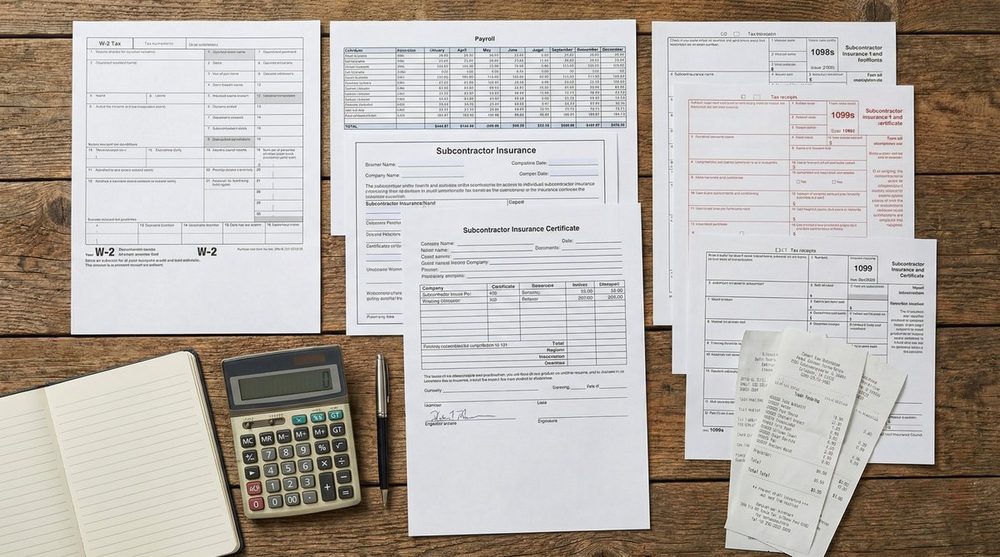
A workers comp audit occurs annually within 60 days after policy expiration. The auditor reviews payroll records, tax forms (W-2s, 1099s), and subcontractor certificates to verify you paid the correct premium based on actual payroll. You may owe additional premium or receive a refund depending on actual versus estimated figures.
Do I need workers comp for 1099 contractors?
Generally no, legitimate independent contractors (1099 workers) should carry their own workers comp. However, if they don't have coverage, your insurance company may charge you for their payroll during audits. Always collect and verify certificates of insurance from all subcontractors to avoid surprise premium charges.
What is pay-as-you-go workers comp?
Pay-as-you-go workers comp links premium payments directly to each payroll run, so you pay based on actual payroll rather than estimated amounts. This improves cash flow, eliminates large year-end audit adjustments, ensures accurate payments, and is especially helpful for seasonal framers with fluctuating payroll throughout the year.
What's the difference between class code 5645 and 5403?
Class code 5645 applies to residential carpentry and framing for buildings three stories or less, with rates averaging $6-13 per $100 payroll. Class code 5403 covers carpentry work on commercial structures or residential buildings over three stories, with rates averaging $7-15 per $100 payroll due to increased fall risk at height.
Workers Comp for Framers: Next Steps
Key Takeaways
- Workers comp costs $400-$8,000 annually depending on your business size, state, and claims history—but you have significant control over these costs through safety programs and proper management.
- The 200% increase in framing claims in 2024 makes it more critical than ever to implement fall protection, safety training, and injury prevention programs to protect both your workers and your bottom line.
- Your Experience Modification Rate can make or break your profitability—a single serious claim affects your premiums for 3+ years, making prevention the most cost-effective strategy.
- Seven proven strategies can reduce your workers comp costs by 15-55%—from implementing safety programs to verifying subcontractor coverage to using pay-as-you-go payment plans.
Ready to Reduce Your Workers Comp Costs?
Get personalized quotes from carriers who specialize in framing contractor insurance.
Get Free Workers Comp QuotesAction Items for Your Framing Business
- Calculate your estimated cost using the formula: (Payroll ÷ $100) × Rate × EMR
- Verify your class code is correct for your specific framing work
- Check your EMR and challenge any errors on your worksheet
- Implement at least a basic safety program starting with fall protection and toolbox talks
- Get quotes from multiple carriers using an independent agent who specializes in construction
- Consider pay-as-you-go programs for improved cash flow and accuracy
Additional Resources
For more information on managing your framing contractor business and insurance costs, explore these authoritative sources:
- OSHA Construction Safety Standards - Federal safety requirements
- FrameSAFE Program - Framing-specific safety program
- NCCI Classification Information - Workers comp class codes and rates
- Bureau of Labor Statistics Construction Data - Industry injury statistics
- CPWR Construction Research - Safety research and training resources